蛋白性液体Proteinaceous Fluid · 耳 · 特殊感觉系统 · NTP ntp-0359
诊断要点:蛋白性液体应作出诊断并赋予严重程度分级。诊断中应使用适当的部位修饰词(例如中耳或外耳)以标明液体的位置。
病变描述
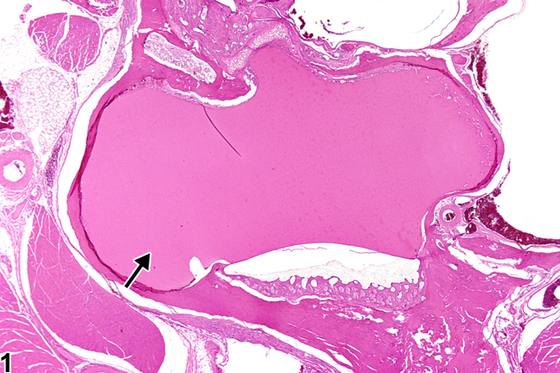
蛋白性液体可因轻度至中度血管损伤而蓄积于内耳道、中耳道或外耳道。耳道内的蛋白性液体以嗜酸性(eosinophilic)、均质、含少量至无炎性细胞的物质为特征(Figure 1)。
诊断与分级建议(NTP 共识)
蛋白性液体应作出诊断并赋予严重程度分级。诊断中应使用适当的部位修饰词(例如中耳或外耳)以标明液体的位置。若该液体为炎症过程所致(即周围组织存在其他炎症证据),则应诊断炎症,并在病理学描述中记述蛋白性液体。
图谱
英文原文
展开 NTP 官方英文描述与建议
Comment:
Proteinaceous fluid may accumulate in the inner, middle, or external ear canals as the result of mild to moderate vascular damage. Proteinaceous fluid in the ear canals is characterized by eosinophilic, homogeneous material with few to no inflammatory cells ( Figure 1 ).
Recommendation:
Proteinaceous fluid should be diagnosed and assigned a severity grade. An appropriate site modifier (e.g., middle ear or external ear) should be used in the diagnosis to indicate the location of the fluid. If the fluid is the result of an inflammatory process (i.e., there is other evidence of inflammation in the surrounding tissues), inflammation should be diagnosed and the proteinaceous fluid described in the pathology narrative.
来源与引用
原始条目:https://ntp.niehs.nih.gov/atlas/nnl/special-senses-system/ear/ProteinaceousFluid
图谱总目录:NTP Nonneoplastic Lesion Atlas。 内容属美国联邦政府作品(公有领域),可引用;引用时请标注来源。
建议引用格式:NTP Nonneoplastic Lesion Atlas. Proteinaceous Fluid (ear). LabSmart 中文版:
https://www.labsmart.cn/ntp/ear-proteinaceous-fluid.html
中文图谱总页(可展开对照全部 595 条):https://www.labsmart.cn/ntp-atlas.html#ear-proteinaceous-fluid