炎症Inflammation · 输卵管 · 雌性生殖系统 · NTP ntp-0547
诊断要点:输卵管——炎症只要存在就应诊断并分级。应在诊断中通过使用限定词指明炎症类型。继发于炎症的病变,如坏死、出血和水肿,除非严重程度需要,不应单独诊断,但应在病理学叙述中描述。
病变描述
在NTP研究中,炎症有五种标准类别:急性(急性(acute))、化脓性(化脓性(suppurative))、慢性(慢性(chronic))、慢性活动性(慢性 active)和肉芽肿性(肉芽肿性(granulomatous))。在急性炎症(Figure 1、Figure 2、Figure 3)中,主要浸润细胞是中性粒细胞(neutrophil),但也可能存在较少的巨噬细胞(macrophage)和淋巴细胞(lymphocyte)。还可能有水肿或充血(hyperemia)的证据。中性粒细胞也是化脓性炎症中的主要浸润细胞类型,但它们聚集在一起,其中许多已变性(化脓性渗出物,化脓性 exudate)。渗出物中还可能存在细胞碎片(来自 resident 细胞群体和浸润的白细胞)、含纤维蛋白(fibrin)的蛋白性液体、较少的巨噬细胞、偶见的淋巴细胞或浆细胞(plasma cell),以及可能的感染因子。肉眼上,这些病变以脓液(pus)的存在为特征。渗出物周围的组织可能含有成纤维细胞(fibroblast)、纤维结缔组织(fibrous connective tissue)和混合性炎症细胞,取决于病变的慢性程度。脓肿(abscess)在组织学上诊断为化脓性炎症。淋巴细胞在慢性炎症中占主导地位。淋巴细胞在慢性活动性炎症中也占主导地位,但也存在显著数量的中性粒细胞。两种病变均可能含有巨噬细胞。肉芽肿性炎症是慢性炎症的另一种形式,但该诊断要求存在显著数量的聚集性、大型、活化巨噬细胞、上皮样巨噬细胞(epithelioid macrophage)或多核巨细胞(multinucleated giant cell)。炎症与细胞浸润的鉴别在于其他改变的存在,如水肿、出血、变性、坏死或其他组织损伤的证据。输卵管(oviduct)的炎性疾病通常代表来自子宫的上行性感染。多种细菌微生物可能引起这些感染,但啮齿动物的感染性疾病现已罕见。输卵管与子宫一样,在妊娠期或动情周期的黄体期可能更易发生感染。Mycoplasma pulmonis 与慢性生殖道疾病相关,化脓性卵巢炎(purulent oophoritis)和输卵管炎(salpingitis)是生殖道的主要病变。
诊断与分级建议(NTP 共识)
输卵管——炎症只要存在就应诊断并分级。应在诊断中通过使用限定词指明炎症类型。继发于炎症的病变,如坏死、出血和水肿,除非严重程度需要,不应单独诊断,但应在病理学叙述中描述。如果炎症继发于其他病变(例如坏死或肿瘤),除非严重程度需要,不应单独诊断,但应在叙述中描述为原发病变成分。
图谱
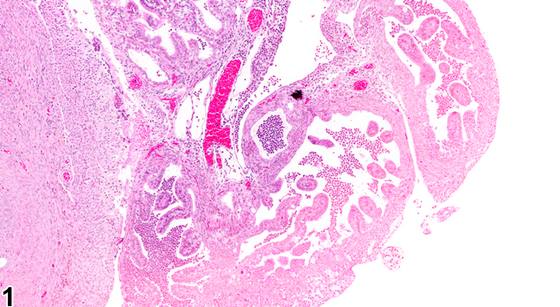
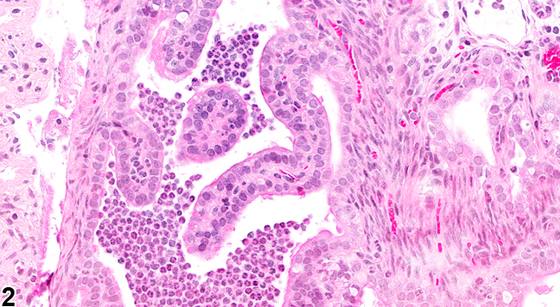
英文原文
展开 NTP 官方英文描述与建议
Comment:
In NTP studies, there are five standard categories of inflammation: acute, suppurative, chronic, chronic active, and granulomatous. In acute inflammation ( Figure 1 , Figure 2 and Figure 3 ), the predominant infiltrating cell is the neutrophil, though fewer macrophages and lymphocytes may also be present. There may also be evidence of edema or hyperemia. The neutrophil is also the predominant infiltrating cell type in suppurative inflammation , but they are aggregated, and many of them are degenerate (suppurative exudate). Cell debris, both from the resident cell populations and from infiltrating leukocytes, and proteinaceous fluid containing fibrin, fewer macrophages, occasional lymphocytes or plasma cells, and, possibly, an infectious agent may also be present in within the exudate. Grossly, these lesions would be characterized by the presence of pus. The tissue surrounding the exudate may contain fibroblasts, fibrous connective tissue, and mixed inflammatory cells, depending on the chronicity of the lesion. Abscesses are diagnosed histologically as suppurative inflammation. Lymphocytes predominate in chronic inflammation . Lymphocytes also predominate in chronic active inflammation , but there are also a significant number of neutrophils. Both lesions may contain macrophages. Granulomatous inflammation is another form of chronic inflammation, but this diagnosis requires the presence of a significant number of aggregated, large, activated macrophages, epithelioid macrophages, or multinucleated giant cells. Inflammation is differentiated from cellular infiltrates by the presence of other changes, such as edema, hemorrhage, degeneration, necrosis, or other evidence of tissue damage. Inflammatory diseases of the oviducts usually represent an ascending infection from the uterus. A variety of bacterial organisms may cause these infections, but infectious diseases of rodents are now rare. The oviducts, like the uterus, are probably more susceptible to infections in pregnancy or the luteal phase of the estrus cycle. Mycoplasma pulmonis is associated with chronic genital disease, and a purulent oophoritis and salpingitis are the major lesions in the reproductive tract.
Recommendation:
Oviduct - Inflammation should be diagnosed and graded whenever present. The type of inflammation should be indicated in the diagnosis by use of a qualifier. Lesions secondary to inflammation, such as necrosis, hemorrhage, and edema, should not be diagnosed separately unless warranted by severity but should be described in the pathology narrative. If the inflammation is secondary to another lesions (e.g., necrosis or neoplasia), it should not be diagnosed separately unless warranted by severity, but it should be described in the narrative as a component of the primary lesion.
来源与引用
原始条目:https://ntp.niehs.nih.gov/atlas/nnl/reproductive-system-female/oviduct/Inflammation
图谱总目录:NTP Nonneoplastic Lesion Atlas。 内容属美国联邦政府作品(公有领域),可引用;引用时请标注来源。
建议引用格式:NTP Nonneoplastic Lesion Atlas. Inflammation (oviduct). LabSmart 中文版:
https://www.labsmart.cn/ntp/oviduct-inflammation.html
中文图谱总页(可展开对照全部 595 条):https://www.labsmart.cn/ntp-atlas.html#oviduct-inflammation