萎缩Atrophy · 卵巢 · 雌性生殖系统 · NTP ntp-0521
诊断要点:卵巢-萎缩(Ovary - Atrophy)仅在与处理相关时记录并分级。区分处理相关萎缩与衰老所致萎缩很重要,与衰老相关的萎缩性病变不应诊断。
病变描述
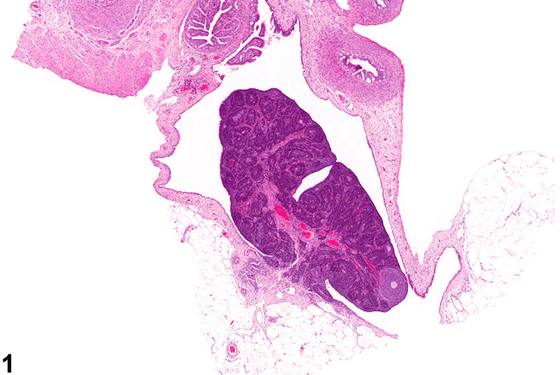
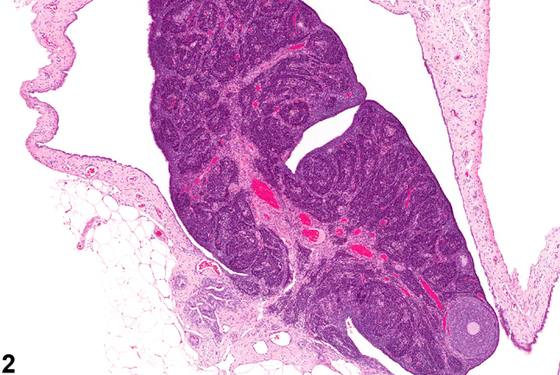
卵巢萎缩(Ovarian atrophy)随年龄增长(衰老)发生,也可能由给予药物或暴露于阻断或抑制卵巢营养性调控的化学物质引起。卵巢萎缩定义为卵巢大小和重量减小,以及卵母细胞、发育中的卵泡和黄体数量减少(Figure 1、Figure 2、Figure 3)。萎缩的卵巢体积小,卵泡和黄体明显缺失,间质增多,间质中常见明显的色素沉着(Figure 4、Figure 5、Figure 6)。在NTP致癌性研究中,B6C3F1小鼠卵巢萎缩的发生率高于F344大鼠。与卵巢萎缩相关的其他所见,如果认为相关,可单独诊断,并可能为毒性或致癌性研究中萎缩的发病机制提供信息。这些所见可能包括间质细胞增生、滤泡上皮坏死、囊性卵泡数量增多、色素或脂质蓄积、胆固醇裂隙、黄体玻璃样变性、纤维化和矿化。
诊断与分级建议(NTP 共识)
卵巢-萎缩(Ovary - Atrophy)仅在与处理相关时记录并分级。区分处理相关萎缩与衰老所致萎缩很重要,与衰老相关的萎缩性病变不应诊断。当萎缩与处理相关时,在病理学描述中描述卵巢中存在的改变很重要。病理学家还应检查子宫和阴道的继发性萎缩以及乳腺组织中的相关改变。卵巢-萎缩是短期研究的合适诊断。如果诊断了处理相关的卵巢萎缩,应通知NTP可能需要更详细的研究(例如,原始卵泡、初级卵泡和窦卵泡及黄体的计数)。
图谱
英文原文
展开 NTP 官方英文描述与建议
Comment:
Ovarian atrophy occurs with age (senescence) or may result from administration of drugs or exposure to chemicals that block or suppress trophic control of the ovary. Ovarian atrophy is defined as decreased ovarian size and weight and decreased numbers of oocytes, developing follicles, and corpora lutea ( Figure 1 , Figure 2 and Figure 3 ). Atrophic ovaries are small, with a conspicuous absence of follicles and corpora lutea and the presence of increased stroma, with frequent prominent pigment in the interstitium ( Figure 4 , Figure 5 and Figure 6 ). Atrophy occurs more frequently in B6C3F1 mice than in F344 rats in NTP carcinogenicity studies. Additional findings associated with ovarian atrophy may be diagnosed separately if deemed relevant and may provide information as to pathogenesis of atrophy in toxicity or carcinogenicity studies. These findings may include interstitial cell hyperplasia, necrosis of follicular epithelium, increased numbers of cystic follicles, accumulation of pigment or lipid, cholesterol clefts, hyaline degeneration of corpora lutea, fibrosis, and mineralization.
Recommendation:
Ovary - Atrophy should be recorded and graded only when treatment related. It is important to distinguish treatment-related atrophy from senescence, and atrophic lesions associated with senescence should not be diagnosed. When atrophy is treatment related, it is important to describe the changes present in the ovary in the pathology narrative. The pathologist should also check for secondary atrophy of uterus and vagina and associated changes in mammary tissue. Ovary - Atrophy is a suitable diagnosis for a short-term study. If treatment-related ovarian atrophy is diagnosed, notify NTP that more detailed studies (e.g., counts of primordial, primary, and antral follicles and corpora lutea) may be warranted.
来源与引用
原始条目:https://ntp.niehs.nih.gov/atlas/nnl/reproductive-system-female/ovary/Atrophy
图谱总目录:NTP Nonneoplastic Lesion Atlas。 内容属美国联邦政府作品(公有领域),可引用;引用时请标注来源。
建议引用格式:NTP Nonneoplastic Lesion Atlas. Atrophy (ovary). LabSmart 中文版:
https://www.labsmart.cn/ntp/ovary-atrophy.html
中文图谱总页(可展开对照全部 595 条):https://www.labsmart.cn/ntp-atlas.html#ovary-atrophy