导管凝结物Duct Concretion · 唾液腺 · 消化系统 · NTP ntp-0234
诊断要点:唾液腺导管中的凝结物只要存在就应诊断。除非分级能揭示处理效应,否则无需分级。继发性病变,如扩张、炎症和纤维化,除非严重程度需要,否则无需单独诊断。
病变描述
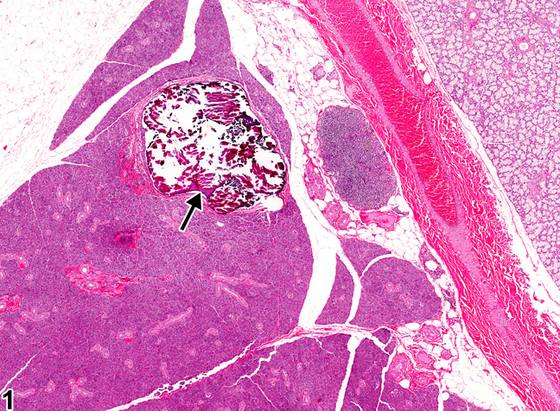
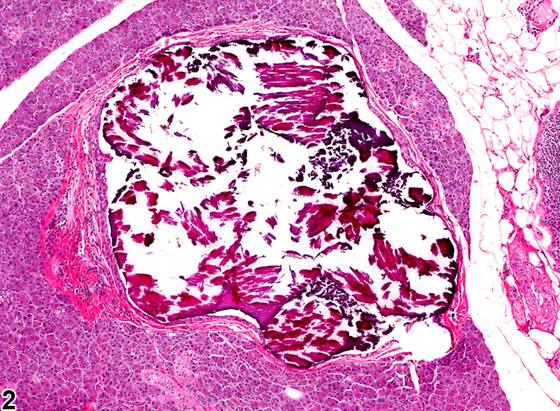
凝结物(导管腔内物质的矿化)不常发生,但最常见于年龄较大的动物,作为背景性病变。它们可能与萎缩同时出现。凝结物或异物可导致导管扩张、炎症和纤维化。
诊断与分级建议(NTP 共识)
唾液腺导管中的凝结物只要存在就应诊断。除非分级能揭示处理效应,否则无需分级。继发性病变,如扩张、炎症和纤维化,除非严重程度需要,否则无需单独诊断。
图谱
英文原文
展开 NTP 官方英文描述与建议
Comment:
Concretions (mineralization of material in the ductular lumen) occur infrequently but are most commonly seen in older animals as a background lesion. They may be seen with atrophy. Concretions or foreign bodies can lead to duct dilation, inflammation, and fibrosis.
Recommendation:
A concretion in a salivary duct should be diagnosed whenever present. They need not be graded unless grading would divulge a treatment effect. Secondary lesions, such as dilation, inflammation, and fibrosis, need not be diagnosed separately unless warranted by severity.
来源与引用
原始条目:https://ntp.niehs.nih.gov/atlas/nnl/alimentary-system/salivary-gland/Duct-Concretion
图谱总目录:NTP Nonneoplastic Lesion Atlas。 内容属美国联邦政府作品(公有领域),可引用;引用时请标注来源。
建议引用格式:NTP Nonneoplastic Lesion Atlas. Duct Concretion (salivary-gland). LabSmart 中文版:
https://www.labsmart.cn/ntp/salivary-gland-duct-concretion.html
中文图谱总页(可展开对照全部 595 条):https://www.labsmart.cn/ntp-atlas.html#salivary-gland-duct-concretion