出血Hemorrhage · 唾液腺 · 消化系统 · NTP ntp-0231
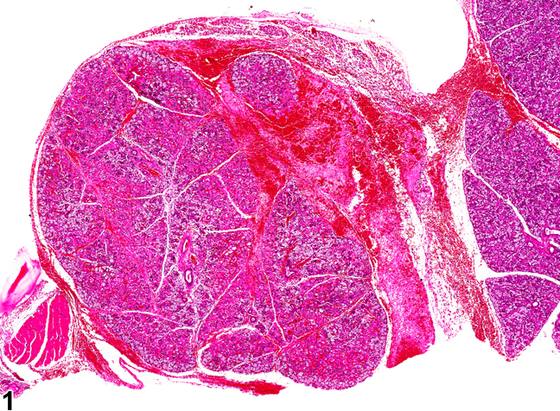
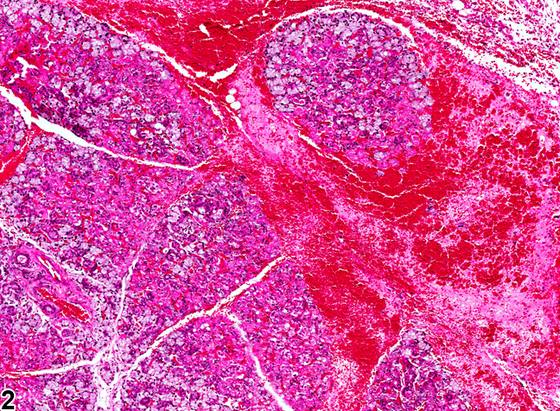
诊断要点:出血应予以诊断,并根据累及范围和区域数量进行分级。如果出血是其他病变(例如坏死、炎症或肿瘤)的一部分,则不应单独诊断,除非其严重程度足以支持单独诊断,但应在叙述中予以描述。
病变描述
出血可继发于创伤、血管炎症或化学毒性所致的血管损伤。出血常见于坏死区域。出血应与血管扩张(angiectasis)相鉴别。对于血管扩张,仔细查找可确认血液实际上位于由内皮细胞衬覆的腔隙内。
诊断与分级建议(NTP 共识)
出血应予以诊断,并根据累及范围和区域数量进行分级。如果出血是其他病变(例如坏死、炎症或肿瘤)的一部分,则不应单独诊断,除非其严重程度足以支持单独诊断,但应在叙述中予以描述。
图谱
英文原文
展开 NTP 官方英文描述与建议
Comment:
Hemorrhage can occur secondary to trauma, inflammation of vessels, or vascular damage secondary to chemical toxicity. Hemorrhage is frequently seen in areas of necrosis. Hemorrhage should be differentiated from angiectasis. With angiectasis, a careful search will confirm that the blood is actually contained within spaces lined with endothelial cells.
Recommendation:
Hemorrhage should be diagnosed and graded based on the extent and number of areas involved. If hemorrhage is a part of another lesion (e.g., necrosis, inflammation, or neoplasia), it should not be diagnosed separately unless warranted by severity but should be described in the narrative.
来源与引用
原始条目:https://ntp.niehs.nih.gov/atlas/nnl/alimentary-system/salivary-gland/Hemorrhage
图谱总目录:NTP Nonneoplastic Lesion Atlas。 内容属美国联邦政府作品(公有领域),可引用;引用时请标注来源。
建议引用格式:NTP Nonneoplastic Lesion Atlas. Hemorrhage (salivary-gland). LabSmart 中文版:
https://www.labsmart.cn/ntp/salivary-gland-hemorrhage.html
中文图谱总页(可展开对照全部 595 条):https://www.labsmart.cn/ntp-atlas.html#salivary-gland-hemorrhage