类骨质增多Increased Osteoid · 骨 · 骨骼肌肉系统 · NTP ntp-0575
诊断要点:当存在时,类骨质增多应予以诊断并给出严重程度分级。当类骨质增多继发于骨增多时,不应诊断类骨质增多,但可在病理学描述中将其描述为骨增多的一个组成部分。
病变描述
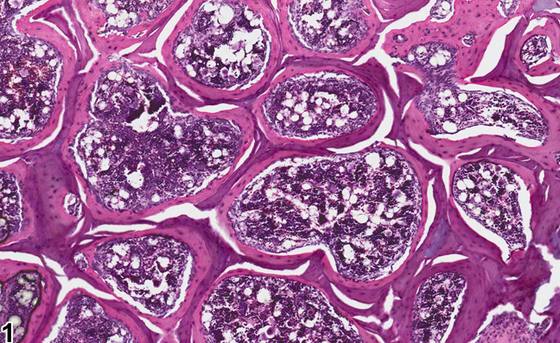
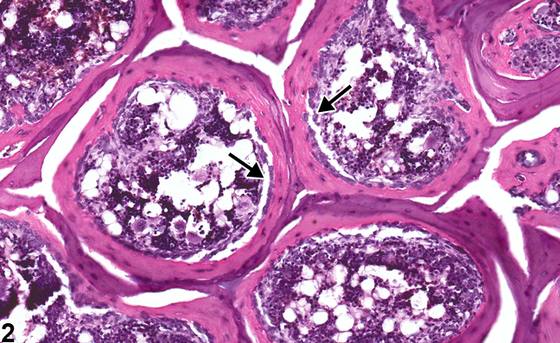
类骨质增多(既往称为骨软化症)的特征是类骨质(osteoid)蓄积导致骨表面积增加(Figure 1、Figure 2)。沿现有骨表面可能出现增宽的类骨质缝。矿化缺陷导致均质、未矿化的类骨质蓄积。在大鼠中,多种抑制类骨质矿化的化合物已诱导出类骨质增多,包括双膦酸盐(bisphosphonates)、铝、镉、磷缺乏和维生素 D 毒性。它也可能在新生骨快速形成时被观察到;继发于快速新生骨形成的类骨质增多应与矿化原发性缺陷或破骨细胞性骨吸收抑制相鉴别。“骨软化症(osteomalacia)”一词历史上用于描述新形成类骨质矿化失败。然而,在描述上述病变时,首选“类骨质增多(increased osteoid)”而非“骨软化症”,因为后者表示骨的肉眼形态学改变(软化)。当生长板处发生骺板或骨骺软骨矿化延迟或不足时,不应将类骨质增多用作诊断。这更恰当地记录为骺板发育不良(佝偻病),其与类骨质增多的区别在于存在增厚的软骨性生长板和干骺端内滞留的软骨核心(见 Bone - Physeal Dysplasia),而非类骨质过多。
诊断与分级建议(NTP 共识)
当存在时,类骨质增多应予以诊断并给出严重程度分级。当类骨质增多继发于骨增多时,不应诊断类骨质增多,但可在病理学描述中将其描述为骨增多的一个组成部分。相关链接:Bone - Physeal Dysplasia
图谱
英文原文
展开 NTP 官方英文描述与建议
Comment:
An increase in the osteoid (previously called osteomalacia) is characterized by an increase in the surface area of bone by the accumulation of osteoid ( Figure 1 and Figure 2 ). There may be widened seams along existing surfaces of bone. Defective mineralization results in an accumulation of homogeneous, unmineralized osteoid. Increased osteoid has been induced in rats by various compounds that inhibit mineralization of osteoid, including bisphosphonates, aluminum, cadmium, phosphorus deficiency, and vitamin D toxicity. It may also be observed as new bone is rapidly being formed; increased osteoid secondary to rapid new bone formation should be differentiated from a primary defect in mineralization or inhibition of osteoclastic bone resorption. The term "osteomalacia" has historically been used to describe failure of newly formed osteoid to mineralize. However, when describing the above lesion, the term "increased osteoid" is preferred over "osteomalacia," since the latter denotes a gross morphologic change of bone (softening). Increased osteoid should not be used as a diagnosis for delayed or inadequate mineralization of physeal or epiphyseal cartilage when occurring at the growth plates. This is more appropriately recorded as physeal dysplasia (rickets) and differs from increased osteoid by the presence of thickened cartilaginous growth plates and retained cartilage cores within the metaphysis (see Bone - Physeal Dysplasia ) rather than excess osteoid.
Recommendation:
When present, increased osteoid should be diagnosed and given a severity grade. Increased osteoid should not be diagnosed when it is secondary to increased bone, but it can be described in the pathology narrative as a component of increased bone. Related Links: Bone - Physeal Dysplasia
来源与引用
原始条目:https://ntp.niehs.nih.gov/atlas/nnl/musculoskeletal-system/bone/IncreasedOsteoid
图谱总目录:NTP Nonneoplastic Lesion Atlas。 内容属美国联邦政府作品(公有领域),可引用;引用时请标注来源。
建议引用格式:NTP Nonneoplastic Lesion Atlas. Increased Osteoid (bone). LabSmart 中文版:
https://www.labsmart.cn/ntp/bone-increased-osteoid.html
中文图谱总页(可展开对照全部 595 条):https://www.labsmart.cn/ntp-atlas.html#bone-increased-osteoid