腮腺腺泡肥大Parotid Acinus Hypertrophy · 唾液腺 · 消化系统 · NTP ntp-0246
诊断要点:唾液腺腺泡肥大应根据腺泡细胞体积增大的程度和受累细胞的数量进行诊断和分级。多灶性(multifocal) 肥大应给予比 局灶性(focal) 肥大更高的严重程度等级。
病变描述
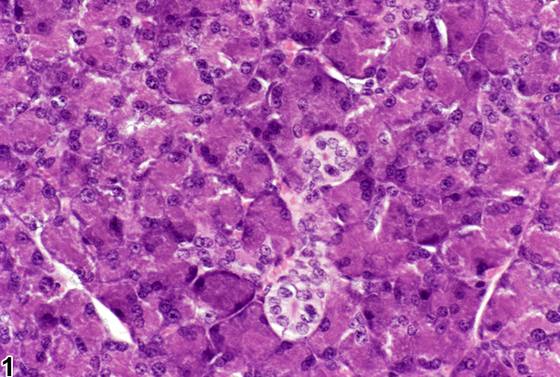
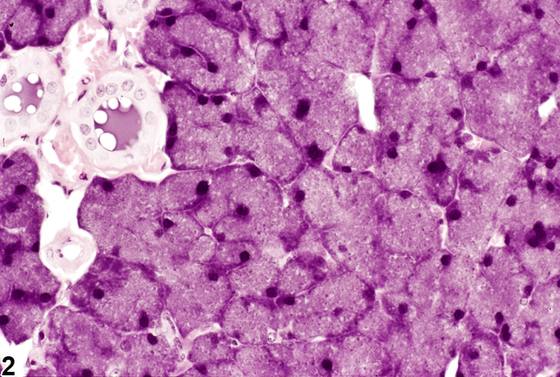
不伴嗜碱性灶的腮腺腺泡细胞弥漫性肥大在 NTP 研究中罕见。同样,下颌下腺和舌下腺的腺泡细胞弥漫性肥大在 B6C3F1 小鼠和 Fischer 344 大鼠中罕见。腺泡细胞肥大(Figure 2)的特征是细胞体积增大,主要由于细胞质增多,尽管肥大细胞的细胞核通常也较大。肥大性嗜碱性灶所见的强烈嗜碱性并不存在,且细胞通常没有那么大。腺泡细胞的弥漫性肥大往往可能是细微变化,需要与对照动物仔细比较。
诊断与分级建议(NTP 共识)
唾液腺腺泡肥大应根据腺泡细胞体积增大的程度和受累细胞的数量进行诊断和分级。多灶性(multifocal) 肥大应给予比 局灶性(focal) 肥大更高的严重程度等级。如果肥大遍及整个腺体,则应在诊断中加上修饰词“弥漫性(diffuse)”。
图谱
英文原文
展开 NTP 官方英文描述与建议
Comment:
Diffuse hypertrophy of parotid salivary gland acinar cells not associated with basophilic foci is rare in NTP studies. Likewise, diffuse acinar cell hypertrophy of the submandibular and sublingual salivary glands is rare in B6C3F1 mice and Fischer 344 rats. Acinar cell hypertrophy ( Figure 2 ) is characterized by increased cell size primarily due to an increase in cytoplasm, although the nuclei are also usually larger in hypertrophied cells. The intense basophilia seen with hypertrophic basophilic foci is not present, and the cells are typically not as large. Diffuse hypertrophy of acinus cells often can be a subtle change requiring close comparison with control animals.
Recommendation:
Salivary gland acinar hypertrophy should be diagnosed and graded based on the degree of increase in acinar cell size and number of cells affected. Multifocal hypertrophy would be assigned a higher severity grade than focal hypertrophy. If the hypertrophy is diffuse throughout the gland, then the modifier "diffuse" should be added to the diagnosis.
来源与引用
原始条目:https://ntp.niehs.nih.gov/atlas/nnl/alimentary-system/salivary-gland/ParotidAcinus-Hypertrophy
图谱总目录:NTP Nonneoplastic Lesion Atlas。 内容属美国联邦政府作品(公有领域),可引用;引用时请标注来源。
建议引用格式:NTP Nonneoplastic Lesion Atlas. Parotid Acinus Hypertrophy (salivary-gland). LabSmart 中文版:
https://www.labsmart.cn/ntp/salivary-gland-parotid-acinus-hypertrophy.html
中文图谱总页(可展开对照全部 595 条):https://www.labsmart.cn/ntp-atlas.html#salivary-gland-parotid-acinus-hypertrophy