淀粉样物质Amyloid · 皮肤 · 皮肤系统 · NTP ntp-0370
诊断要点:淀粉样物质沉积只要存在就应诊断并赋予严重程度分级。
病变描述
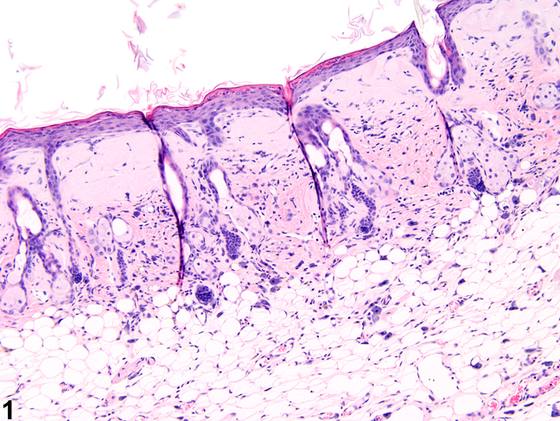
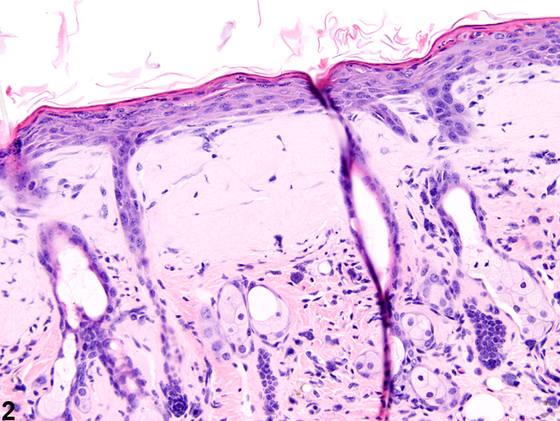
淀粉样物质沉积(amyloid deposition)(Figure 1、Figure 2)是细胞无法清除不可溶性、错误折叠蛋白的结果。它可与慢性炎症中急性期蛋白的过度产生相关,并且通常与系统性淀粉样变性相关。淀粉样物质沉积在大鼠中罕见,但在某些小鼠品系(如Swiss小鼠(CD-1))中作为常见的年龄相关变化出现,推测具有遗传易感性。皮肤中的淀粉样物质沉积几乎总是见于真皮,典型表现为大小不等的无定形、嗜酸性、细胞外物质蓄积,通常位于血管周围。组织化学染色(如刚果红(Congo red))和免疫组织化学染色有助于明确诊断。
诊断与分级建议(NTP 共识)
淀粉样物质沉积只要存在就应诊断并赋予严重程度分级。
图谱
英文原文
展开 NTP 官方英文描述与建议
Comment:
Amyloid deposition ( Figure 1 and Figure 2 ) occurs as a result of cells not being able to eliminate insoluble, misfolded protein. It can be associated with overproduction of acute-phase protein in chronic inflammation and is usually associated with systemic amyloidosis. Amyloid deposition is rare in rats but occurs as a common age-related change in some mouse strains, such as Swiss mice (CD-1), and presumably has a genetic predisposition. Amyloid deposition in the skin is almost always seen in the dermis and typically appears as variably sized accumulations of amorphous, eosinophilic, extracellular material that is usually perivascular. Histochemical (e.g., Congo red) and immunohistochemical stains are useful for definitive diagnosis.
Recommendation:
Amyloid deposition should be diagnosed and assigned a severity grade whenever present.
来源与引用
原始条目:https://ntp.niehs.nih.gov/atlas/nnl/integumentary-system/skin/Amyloid
图谱总目录:NTP Nonneoplastic Lesion Atlas。 内容属美国联邦政府作品(公有领域),可引用;引用时请标注来源。
建议引用格式:NTP Nonneoplastic Lesion Atlas. Amyloid (skin). LabSmart 中文版:
https://www.labsmart.cn/ntp/skin-amyloid.html
中文图谱总页(可展开对照全部 595 条):https://www.labsmart.cn/ntp-atlas.html#skin-amyloid