浆细胞增生Hyperplasia Plasma Cell · 脾脏 · 免疫系统 · NTP ntp-0033
诊断要点:当浆细胞数量超过同期对照动物所见时,应诊断为浆细胞增生。诊断时应进行分级。
病变描述
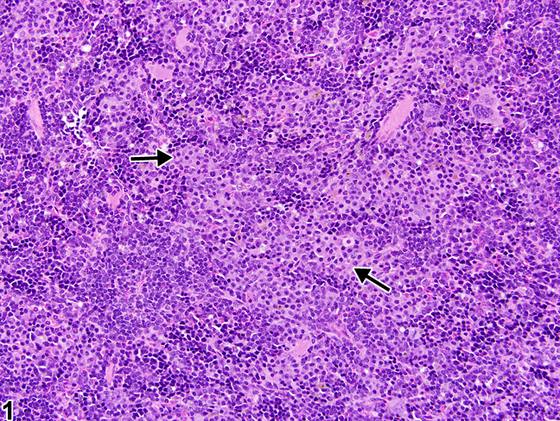
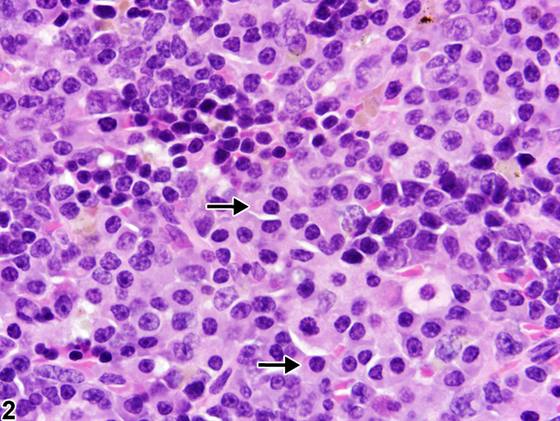
浆细胞增生(plasma cell hyperplasia)是啮齿类动物、尤其是小鼠脾脏中常见的、通常为轻度的病变。它由浆细胞和/或浆母细胞组成,这些细胞在急性或慢性抗原特异性刺激后从白髓(淋巴滤泡、生发中心)迁移至红髓(Figure 1、Figure 2,箭头),并在红髓分泌大量抗体。与正常脾脏细胞成分相混杂的小灶性浆细胞常见于老龄大鼠和小鼠的脾脏。必要时,可通过针对人kappa轻链或免疫球蛋白的免疫组织化学方法识别浆细胞。
诊断与分级建议(NTP 共识)
当浆细胞数量超过同期对照动物所见时,应诊断为浆细胞增生。诊断时应进行分级。
图谱
英文原文
展开 NTP 官方英文描述与建议
Comment:
Plasma cell hyperplasia is a common, often mild, lesion in the spleen of rodents, particularly mice. It consists of plasma cells and/or plasmablasts that migrate to the red pulp from the white pulp (lymphoid follicles, germinal centers) following acute or chronic antigen-specific stimulation ( Figure 1 and Figure 2 , arrows), where they secrete large volumes of antibodies. Small foci of plasma cells that blend in with normal splenic cellular constituents frequently occur in spleens of aged rats and mice. If needed, plasma cells can be identified with immunohistochemistry for human kappa light chains or immunoglobulins.
Recommendation:
Plasma cell hyperplasia should be diagnosed when the number of plasma cells exceeds that seen in concurrent controls. When diagnosed, it should be graded.
来源与引用
原始条目:https://ntp.niehs.nih.gov/atlas/nnl/immune-system/spleen/HyperplasiaPlasmaCell
图谱总目录:NTP Nonneoplastic Lesion Atlas。 内容属美国联邦政府作品(公有领域),可引用;引用时请标注来源。
建议引用格式:NTP Nonneoplastic Lesion Atlas. Hyperplasia Plasma Cell (spleen). LabSmart 中文版:
https://www.labsmart.cn/ntp/spleen-hyperplasia-plasma-cell.html
中文图谱总页(可展开对照全部 595 条):https://www.labsmart.cn/ntp-atlas.html#spleen-hyperplasia-plasma-cell