坏死Necrosis · 脾脏 · 免疫系统 · NTP ntp-0032
诊断要点:无论何时出现,脾坏死均应作出诊断并赋予严重程度分级。如果脾坏死继发于血栓或肿瘤等病变,则不应单独诊断,而应在叙述性描述中加以说明。
病变描述
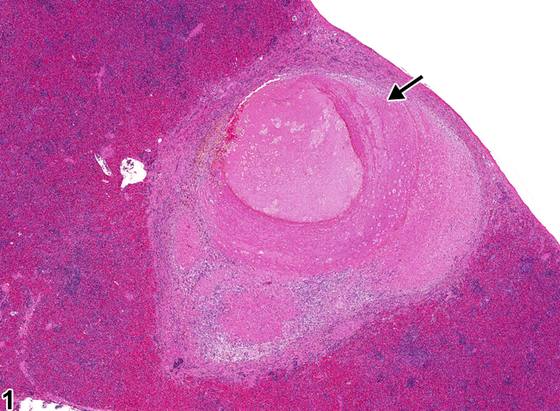
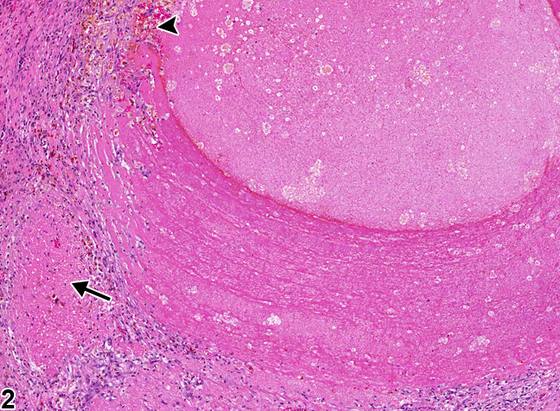
脾坏死(Figure 1、Figure 2、Figure 3、Figure 4、Figure 5、Figure 6)可在啮齿类动物中通过实验诱导产生;然而,该病变更常与血管阻塞、创伤或肿瘤相关。 expansive坏死可与脾内血栓或肿瘤相关。脾实质成分坏死的特征为细胞肿胀、细胞核浓缩和溶解,以及细胞溶解并伴有大量嗜酸性(eosinophilic)胞质和核碎裂(karyorrhectic)碎屑的积聚。炎症、出血、纤维蛋白、纤维化和/或矿化可伴随脾坏死出现。
诊断与分级建议(NTP 共识)
无论何时出现,脾坏死均应作出诊断并赋予严重程度分级。如果脾坏死继发于血栓或肿瘤等病变,则不应单独诊断,而应在叙述性描述中加以说明。继发性病变,如炎症或出血,除非严重程度足以支持,否则不应单独诊断,但应在病理学叙述性描述中加以说明。
图谱
英文原文
展开 NTP 官方英文描述与建议
Comment:
Splenic necrosis ( Figure 1 , Figure 2 , Figure 3 , Figure 4 , Figure 5 , and Figure 6 ) may be induced experimentally in rodents; however, this lesion is more often associated with vascular obstruction, trauma, or neoplasia. Expansive necrosis can be associated with a thrombus or neoplasm in the spleen. Necrosis of splenic constituents is characterized by cell swelling, condensation and dissolution of the nucleus, and cell lysis with accumulation of abundant eosinophilic cytoplasmic and karyorrhectic nuclear debris. Inflammation, hemorrhage, fibrin, fibrosis, and/or mineralization may accompany splenic necrosis.
Recommendation:
Whenever present, necrosis of the spleen should be diagnosed and assigned a severity grade. If splenic necrosis is secondary to a lesion such as thrombus or neoplasia, it should not be diagnosed but should be described in the narrative. Secondary lesions, such as inflammation or hemorrhage, should not be diagnosed separately unless warranted by severity, but should be described in the pathology narrative.
来源与引用
原始条目:https://ntp.niehs.nih.gov/atlas/nnl/immune-system/spleen/Necrosis
图谱总目录:NTP Nonneoplastic Lesion Atlas。 内容属美国联邦政府作品(公有领域),可引用;引用时请标注来源。
建议引用格式:NTP Nonneoplastic Lesion Atlas. Necrosis (spleen). LabSmart 中文版:
https://www.labsmart.cn/ntp/spleen-necrosis.html
中文图谱总页(可展开对照全部 595 条):https://www.labsmart.cn/ntp-atlas.html#spleen-necrosis