发育不良Dysplasia · 脑 · 神经系统 · NTP ntp-0383
诊断要点:在NTP研究中,只要存在此病变,就应当诊断,并将亚部位纳入诊断中。不需要进行严重程度分级。
病变描述
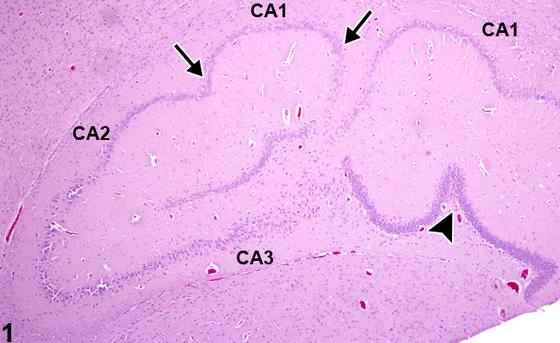
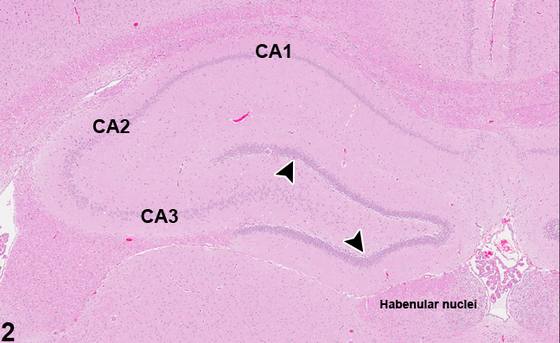
随着世代毒性研究使用的日益增多,识别神经发育不良变得越来越重要。发育不良包括神经结构各组成部分在大小、组织和位置上的发育异常。Figure 1在低倍镜下显示了不常被识别的啮齿类动物海马发育不良的偶发表现。在这个显著的例子中,请注意异常的波浪状CA1区(箭头)和畸形的齿状回(箭头指示)。CA3看起来相对正常。Figure 2为便于比较而标注,显示正常大鼠海马结构。发育不良的神经元病变通常见于皮层、海马和小脑,但大脑的任何部位都可能受累。在大多数情况下,如果有影响,临床上检测不到,但可以解释个别动物出现的异常临床神经体征,如癫痫发作。大鼠神经发育不良的模型包括用甲基氧化偶氮甲醇醋酸盐处理,随后用毛果芸香碱诱导癫痫样发作。
诊断与分级建议(NTP 共识)
在NTP研究中,只要存在此病变,就应当诊断,并将亚部位纳入诊断中。不需要进行严重程度分级。
图谱
英文原文
展开 NTP 官方英文描述与建议
Comment:
With the increasing use of generational toxicity studies, recognizing neural dysplasia is becoming increasingly important. Dysplasias include developmental abnormalities in size, organization, and location of various elements of the neural structures. Figure 1 shows, at low magnification, the appearance of uncommonly recognized incidental rodent hippocampal dysplasia. In this dramatic example, note the abnormal undulating CA1 region (arrows) and malformed dentate gyrus (arrowhead). CA3 appears relatively normal. Figure 2 , labeled for comparison, shows normal rat hippocampal structure. Dysplastic neuronal lesions are usually encountered in the cortex, hippocampus, and cerebellum, but any part of the brain can be affected. In most cases, effects, if any, are not detected clinically but could account for abnormal clinical neurologic signs such as seizures in individual animals. Models of neural dysplasia in rats include treatment with methylazoxymethanol acetate followed by induction of epileptiform seizures by pilocarpine.
Recommendation:
Whenever present in NTP studies, this lesion should be diagnosed and the subsite included in the diagnosis. Severity grading is not required.
来源与引用
原始条目:https://ntp.niehs.nih.gov/atlas/nnl/nervous-system/brain/Dysplasia
图谱总目录:NTP Nonneoplastic Lesion Atlas。 内容属美国联邦政府作品(公有领域),可引用;引用时请标注来源。
建议引用格式:NTP Nonneoplastic Lesion Atlas. Dysplasia (brain). LabSmart 中文版:
https://www.labsmart.cn/ntp/brain-dysplasia.html
中文图谱总页(可展开对照全部 595 条):https://www.labsmart.cn/ntp-atlas.html#brain-dysplasia