鼻甲粘连Turbinate Synechia · 鼻 · 呼吸系统 · NTP ntp-0148
诊断要点:粘连在对照动物中几乎从不见到,可作为坏死性、溃疡性或炎症性上皮病变慢性程度的指标,因此只要观察到即应诊断。
病变描述
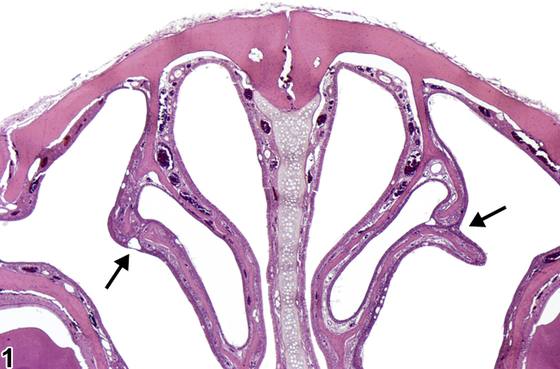
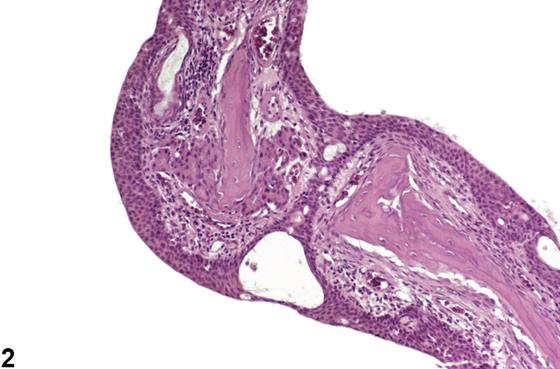
当一侧鼻甲与另一侧鼻甲(Figure 1、Figure 2、Figure 3)、同一鼻甲的另一部位、侧壁(Figure 4)或较少见地与鼻中隔发生粘连时,即可诊断为鼻甲粘连(turbinate synechia)。粘连通常是伴有上皮溃疡或其他黏膜炎症性、退行性/坏死性、再生性/增生性或化生性病变的慢性鼻腔病变的后遗症。大多数粘连倾向于累及上颌鼻甲(maxilloturbinate)和鼻鼻甲(nasoturbinate),但筛鼻甲(ethmoid turbinate)粘连确实也会发生。
诊断与分级建议(NTP 共识)
粘连在对照动物中几乎从不见到,可作为坏死性、溃疡性或炎症性上皮病变慢性程度的指标,因此只要观察到即应诊断。粘连不应进行分级。任何伴随病变,如炎症、纤维化或上皮溃疡、变性或坏死,应单独诊断。
图谱
英文原文
展开 NTP 官方英文描述与建议
Comment:
Turbinate synechia is diagnosed when there is adhesion of one turbinate to another turbinate ( Figure 1 , Figure 2 , and Figure 3 ), to another part of the same turbinate, to the lateral wall ( Figure 4 ), or, less commonly, to the nasal septum. Synechia is typically a sequela to chronic nasal lesions with epithelial ulceration or other mucosal inflammatory, degenerative/necrotic, regenerative/hyperplastic, or metaplastic lesions. Most synechiae tend to involve the maxilloturbinates and nasoturbinates, but synechia of the ethmoid turbinates does occur.
Recommendation:
Synechiae are almost never seen in control animals and can be an indicator of the chronicity of necrotic, ulcerative, or inflammatory epithelial lesions and should therefore be diagnosed whenever they are observed. Synechiae should not be graded. Any accompanying lesions, such as inflammation, fibrosis, or epithelial ulceration, degeneration, or necrosis, should be diagnosed separately.
来源与引用
原始条目:https://ntp.niehs.nih.gov/atlas/nnl/respiratory-system/nose/Turbinate-Synechia
图谱总目录:NTP Nonneoplastic Lesion Atlas。 内容属美国联邦政府作品(公有领域),可引用;引用时请标注来源。
建议引用格式:NTP Nonneoplastic Lesion Atlas. Turbinate Synechia (nose). LabSmart 中文版:
https://www.labsmart.cn/ntp/nose-turbinate-synechia.html
中文图谱总页(可展开对照全部 595 条):https://www.labsmart.cn/ntp-atlas.html#nose-turbinate-synechia